

TRADITIONAL CHINESE ACUPUNCTURE
Acupuncture is a therapeutic technique that began to be practiced in ancient China around 4000 BC. It involves the application of classical acupuncture using sterile, single-use needles at specific points on the body and ear. The area where the needle is inserted is thoroughly disinfected. The size of the needle is much smaller than that of a blooddrawing needle. The method is almost painless and lasts 30 minutes. Acupuncture influences the body’s ability to self-heal naturally by balancing its blocked energy (Qi). According to traditional Chinese medicine, there are energy channels throughout the body through which energy flows. When there is a problem in this flow, needles are placed at specific points to restore it. This entire practice is based on the theory of the five elements, and a detailed medical history is required in order to determine which organ is affected and to choose the appropriate acupuncture points. This method has existed for centuries and whole hospitals in China rely on it to treat chronic conditions as well as emergency cases using acupuncture alone.
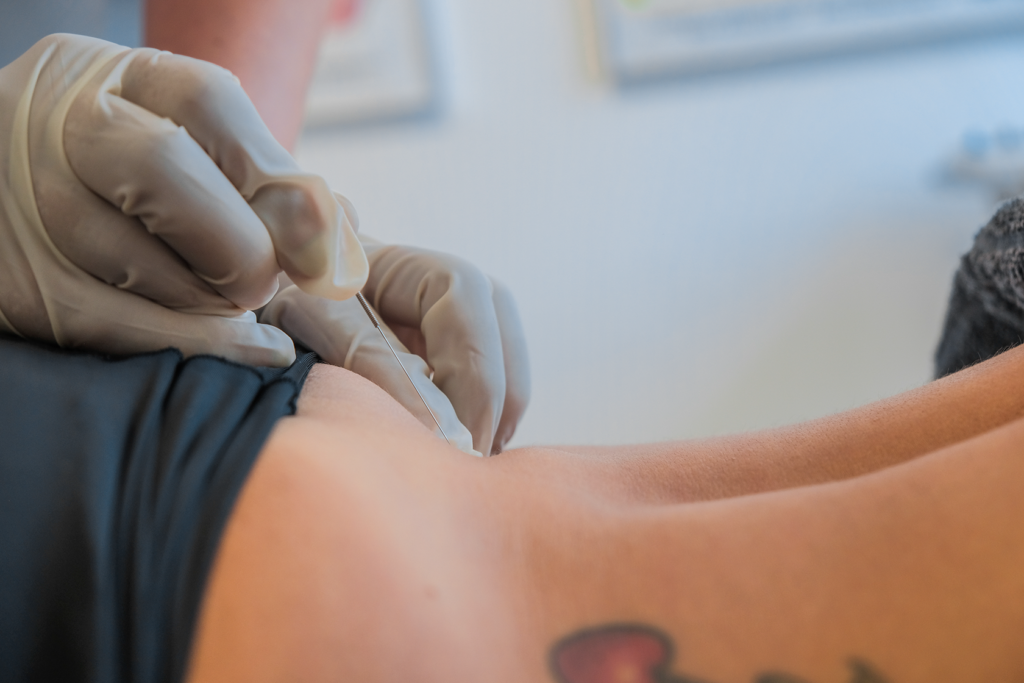
WESTERN APPROACH TO ACUPUNCTURE
Acupuncture has been known for centuries for its pain-relieving, antiinflammatory, antidepressant, and anti-allergic effects. However, following the publication of numerous studies in reputable international scientific journals and its application by distinguished clinical and academic physicians, acupuncture has now gained the documentation and credibility it deserves. Its balancing effect on the hormonal and immune systems has also been recognized in recent years by the medical community. Its action appears to be exerted through the system that produces endogenous opioids (endorphins) after the placement of needles at certain points on the body and skull. The stimulus applied is transmitted via neural pathways to the spinal cord and brain. Today, painful/sensitive spots on the body (trigger points) are well-known; these are areas of muscular contraction that hurt upon palpation. In most cases, these points coincide with the acupuncture points proposed by Chinese medicine, but particular skill and very good knowledge of human anatomy are required for a physician to locate them accurately. When this method is applied by someone knowledgeable in the field, it yields remarkable results. It is no coincidence that in the United States there are acupuncture clinics dedicated exclusively to the treatment of trigger points, where physicians and physiotherapists collaborate as a team.
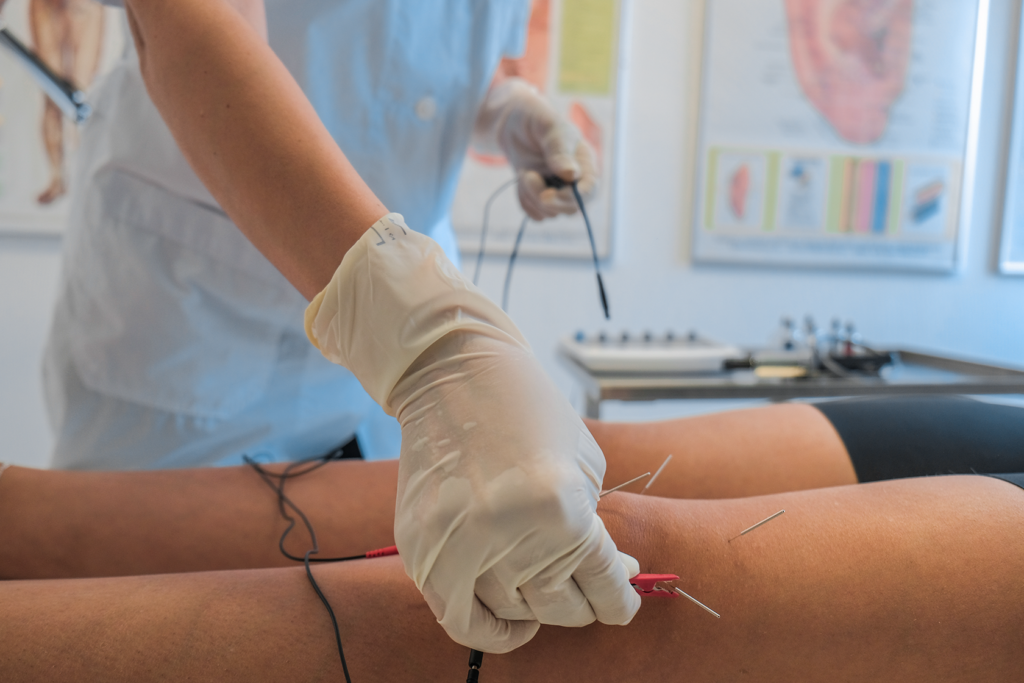
ELECTROACUPUNCTURE
This method involves the application of electrical current of specific frequency, waveform and intensity, each with particular therapeutic effects. Depending on the treatment goal, the appropriate program is selected. There are specific electrical currents used for anti-inflammatory and analgesic (pain-relieving) purposes, as well as currents used for weight loss aimed at stimulating acupuncture points (e.g., those related to metabolism).The duration is 20 minutes, and it is perceived as a mild “sweet tingling” sensation in the area where it is applied, without causing pain to the patient.
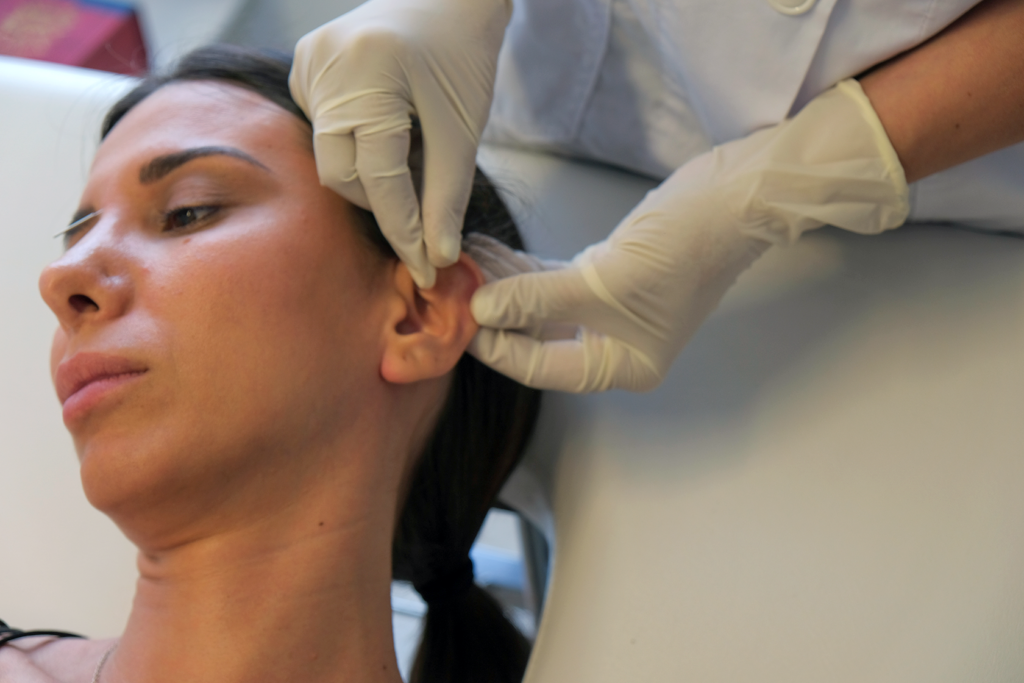
AURICULAR ACUPUNCTURE
Specifically for the ear, it has been found—according to the French neurologist Nogier—that all points of the body are represented by corresponding points on the ear, just as in the brain. The detection of these points on the ear is performed with a special device. For example, if the knee hurts, the corresponding pain is reproduced at a specific point on the ear. Once this point is located, a semi-permanent needle (in skin color) is placed there with millimeter precision to treat the knee pain. The action of auricular acupuncture is exerted through neural pathways that transmit the stimulus to the spinal cord and brain through specialized channels.
Instead of taking external medication, we stimulate the body to produce its own by placing needles at specific points on the body and ear.